
No threats detected
All checks passed. This site appears legitimate — but always stay alert for phishing even on trusted domains.
Is byu.edu legit or a scam?
This looks safe to use.
Official Brigham Young University site with clean security scans and established institutional registration.
Analysis Summary
Website Preview
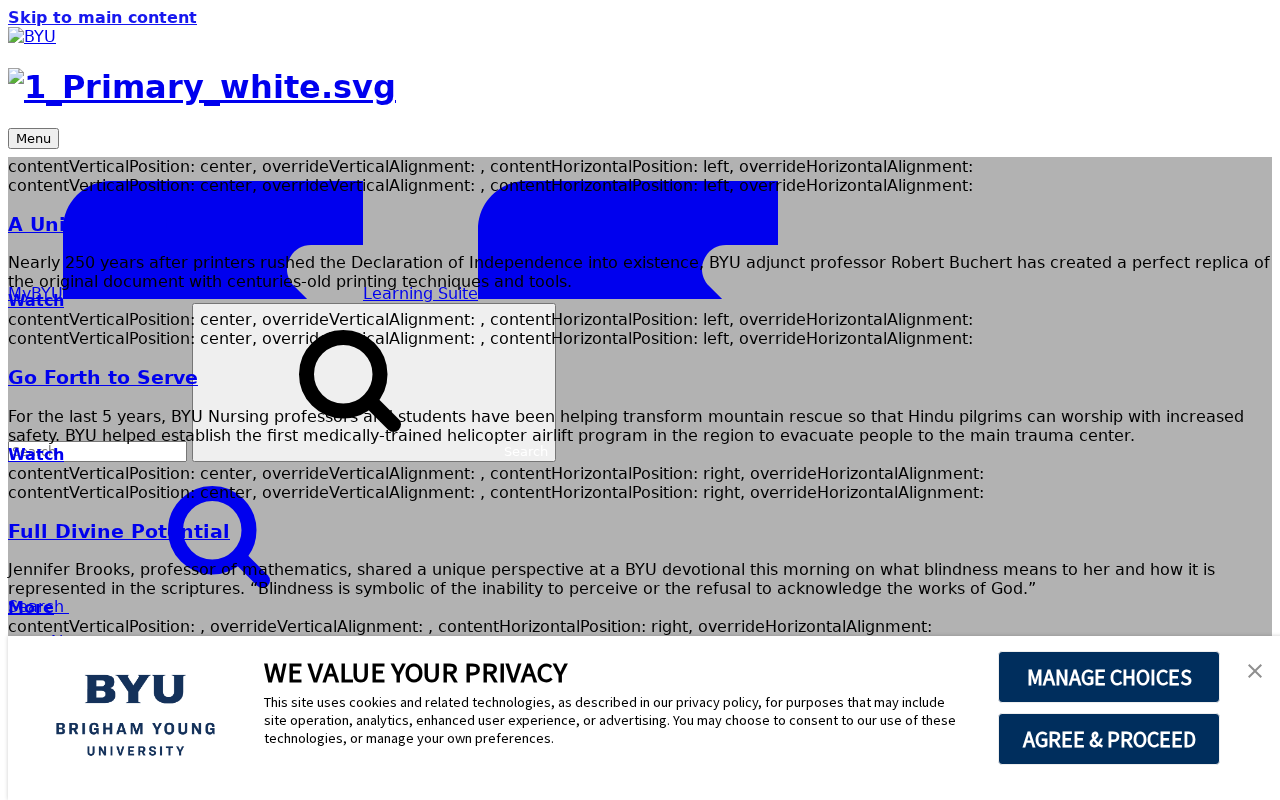
Automated page render — captured in a safe sandbox. What an ordinary visitor would see when loading the site.
Visual analysis
We capture a fresh screenshot of the live page and ask a vision model to look for scam visual patterns — fake trust badges, countdown timers, overlay pop-ups, and visual clones of legitimate brands.
Visual similarities noted — cleared by the overall checks
Our vision model noted some visual similarity to a known brand, but the domain, security records, and reputation checks confirm this is the legitimate site — so this is shown for transparency, not as a red flag.
What our vision model saw
3 signalsScreenshot incomplete — site may be slow to render
Visible debug or layout metadata text throughout the page
Broken image assets and placeholder text elements
Intelligence
The domain serves as the official homepage for Brigham Young University, a private research university in Provo, Utah. All 92 antivirus engines returned clean results and the hosting IP shows zero abuse reports. The page displays authentic university content including admissions, academics, and campus news. Business registration confirms the university operates as an active entity in the United States. The only notable concern is that the domain is frequently targeted by external phishing campaigns impersonating BYU staff, but the site itself shows no malicious indicators.
Web Research Findings
Our live research agent queries scam-report databases, consumer-review sites, news coverage, and general web search for byu.edu, then cross-checks business-registration records and look-alike domain patterns. Everything below is pulled from what it actually found.
- byu.edu is the official website of Brigham Young University, a private research university based in Provo, Utah.
- The university is part of the Church Educational System (CES) of The Church of Jesus Christ of Latter-day Saints.
- The domain is frequently targeted by phishing campaigns that impersonate BYU IT support or university leadership to steal credentials or solicit fraudulent gift card purchases.
- BYU maintains dedicated security resources (e.g., phishing@byu.edu) to help students and staff report and identify these scams.
- The university provides official information regarding admissions, academics, and campus life through this domain.
- CES Security Operations Centeropen
"BYU campus community, in the last few days, employees and students across campus have been receiving deceptive messages that are part of a phishing scam to gain personal information."
- BYU Integrity and Compliance Officeopen
"Online scammers are targeting members of the BYU campus community with fraudulent emails, asking them to make large purchases on behalf of certain individuals and departments on campus."
Brigham Young University is a private research university in Provo, Utah, sponsored by The Church of Jesus Christ of Latter-day Saints.
Our research found two scam reports from CES Security Operations Center and BYU Integrity and Compliance Office. Both describe phishing emails targeting students and employees with requests for personal information or fraudulent purchases. The reports confirm these attacks impersonate the university rather than originating from byu.edu. No complaints or negative reviews about the domain itself were located.
Threat Detection
Antivirus Engines
Security Scans
Checked against the major public blocklists used by browsers and security tools — no hits.
Reputation Sources
How this domain rates across independent threat-intelligence and blocklist providers.
Technical Details
domain · encryption · redirects · server reputation · referencedThe plumbing behind the site — who registered it, how it’s encrypted, where it’s hosted, and where it links out. A valid certificate or a calm server doesn’t mean the business is honest — scam sites pass these checks too. Use this to corroborate the verdict, not to overturn it.
Contact Verification
We fetched the page and looked for real-world contact details. Legitimate businesses almost always publish an email on their own domain, a phone number, and a postal address. Scam shops usually don't.
- No postal address visible on the page.
- Contact email on the site's own domain (byu-info@byu.edu).
- Phone number listed (801-422-4636).
- Links to 4 social profiles.
Domain & Encryption
Redirect Chain
- 1301http://byu.edu/
- 2200https://www.byu.edu/
Server Reputation
Referenced Domains
Outbound domains this page links to or loads resources from. Each links to its own security scan.
What to do
Still, stay alert
No major threat indicators — but a clean scan does not guarantee every page is safe, and phishing emails routinely spoof real domains.
- Double-check the exact URL in your address bar
Confirm you are actually on byu.edu and not a lookalike like b-yu.edu.com or an IDN homoglyph.
- Use a password manager
Password managers only auto-fill on the exact domain they were saved for — they refuse to fill lookalike domains, which is the single best phishing defence.
- OpenDiscuss this site on the forum
If you have first-hand experience with this site — good or bad — share it with the MalwareTips community.
Final Verdict
byu.edu is the official website of Brigham Young University. The domain shows clean scans across all engines, hosts a legitimate university site, and carries active business registration in the United States. No payment or login forms appear on the homepage.
Safety FAQ
Common questions, answered directly from the scan data above — so the answers always reflect the latest verdict on this page.
- Our automated security review found no threat indicators on byu.edu, so it appears legitimate. All 92 antivirus engines we queried report it clean, it ranks among the world's most-visited sites, Even so, always double-check the exact address in your browser, because phishing emails routinely spoof real, trusted domains like this one.
- byu.edu passed our automated checks with a trust score of 95/100. No antivirus engines or major blacklists flagged it at the time of the last scan, and its signals line up with an established, legitimate site. Treat any unexpected login prompt or payment request on it with the same caution you would anywhere.
- Yes — and this is worth understanding. Even trustworthy domains get spoofed in phishing emails (a fake message that only looks like it's from byu.edu), and legitimate sites are occasionally compromised on specific pages. A clean verdict means the site itself checks out today; it does not mean every email or link claiming to be from byu.edu is genuine. Always reach the site by typing the address yourself rather than clicking links in unexpected messages.
- No — all 92 antivirus and blocklist engines in our malware network currently report byu.edu as clean. That's a good sign, though antivirus coverage is only one of the many signals we weigh, and brand-new scam sites can appear clean before vendors catch up.
- No — byu.edu is not currently on the major browser blocklist feeds that Chrome, Safari, Firefox, and Edge rely on. Note that blocklists can lag behind brand-new scam domains, so "not listed" is reassuring but not a guarantee on its own.
- Yes — byu.edu presents a valid TLSv1.3 certificate issued by DigiCert Inc · DigiCert Global G2 TLS RSA SHA256 2020 CA1, valid for another 148 days. Important caveat: SSL only encrypts the connection between you and the site — it does not verify who runs it. Almost all scam sites now have valid SSL too, so a padlock alone never means "safe".
- byu.edu resolves to an IP operated by Brigham Young University in US (University/College/School). Hosting location alone doesn't make a site good or bad — but hosting that doesn't match a brand's claimed country, or that sits on networks known for abuse, is one of the many signals we weigh alongside the verdict above.
- Yes — byu.edu ranks in the global top 100,000 most-visited sites, which means it has substantial real-world traffic. Genuine popularity doesn't automatically make a site safe, but throwaway scam domains almost never reach this level of traffic, so it's a meaningful point in the site's favour.
- This report is a record of the scan run on July 14, 2026, and the verdict reflects that point in time. Scam sites change fast — they can go live, get flagged, or vanish within days — so if you believe something about byu.edu has changed, MalwareTips staff can run a fresh scan that re-checks every signal from scratch and republishes an updated verdict.
User reviews & comments(0)
Share your experience — "Lost $200 on a fake checkout" is more useful than "Scam". Your review helps others avoid traps.