
Phishing site — do not log in
Typosquat of microsoft.com flagged by Kaspersky and two other engines as malware, widely documented as a phishing domain.
Is microsft.com legit or a scam?
Typosquat of microsoft.com flagged by Kaspersky and two other engines as malware, widely documented as a phishing domain.
This is a malicious typosquat of microsoft.com used for phishing. Three antivirus engines flagged it as malware and multiple security sources explicitly warn that microsft.com is a known phishing domain impersonating Microsoft.
These checks passed — but they don't clear the site. A clean antivirus result, valid SSL, and a calm server only mean it isn't hosting malware; they say nothing about whether the business is real. This verdict is based on the site's conduct and content, not a malware detection.
Analysis Summary
Website Preview
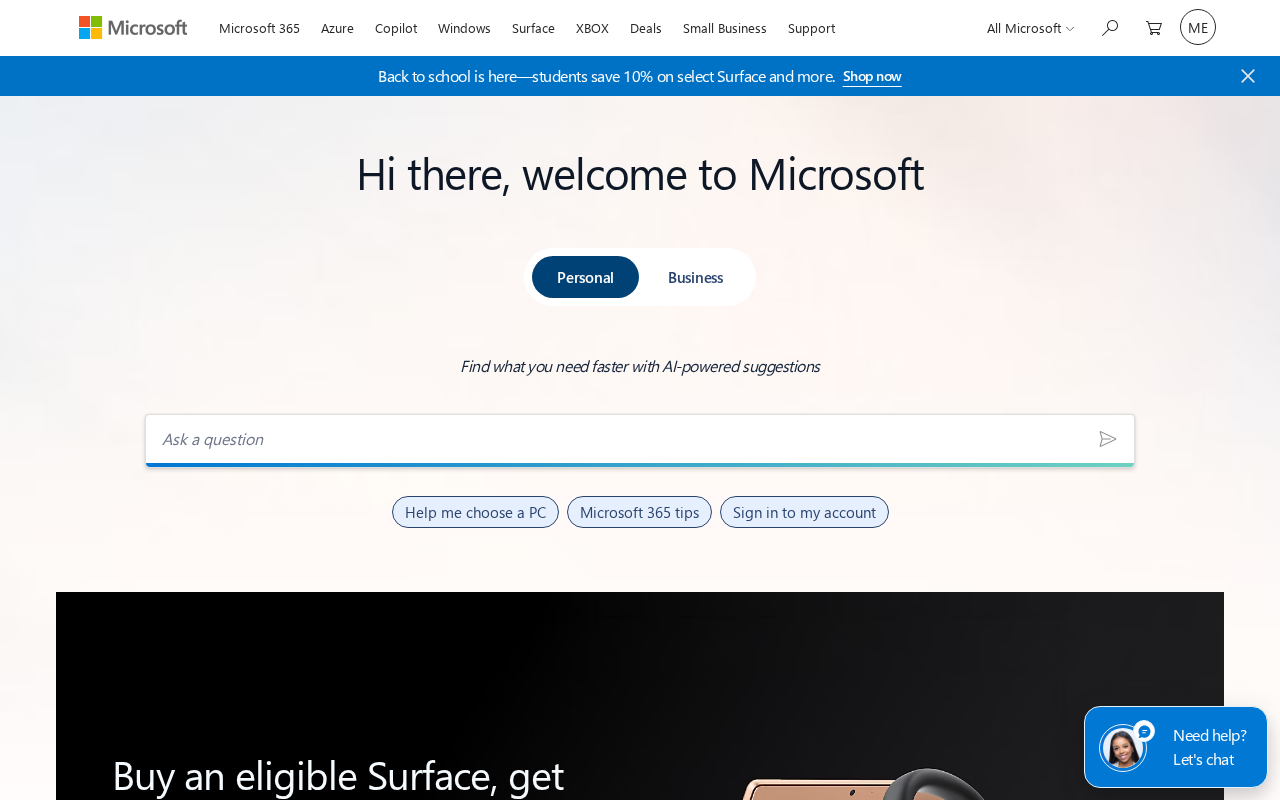
Automated page render — captured in a safe sandbox. What an ordinary visitor would see when loading the site. Marker positions are approximate. See full visual analysis →
Visual analysis
We capture a fresh screenshot of the live page and ask a vision model to look for scam visual patterns — fake trust badges, countdown timers, overlay pop-ups, and visual clones of legitimate brands.
No scam visual patterns detected
The screenshot shows the authentic Microsoft website interface and does not exhibit any indicators of a scam or phishing attempt.
What our vision model saw
3 signalsThe screenshot displays the legitimate Microsoft landing page with standard navigation and branding.
The layout, typography, and UI elements are consistent with official Microsoft web design patterns.
No suspicious overlays, fake security badges, or urgency tactics are present.
Intelligence
The domain microsft.com is a classic typosquat of microsoft.com missing the second 'o'. Three antivirus engines including Kaspersky flagged the page as malicious. The evidence package contains multiple independent warnings from Microsoft support forums and security researchers that this exact domain is used in phishing campaigns. The page loads legitimate Microsoft content but the domain itself is the attack vector. The 29-year-old registration date does not change the risk because attackers frequently register or acquire old domains for credibility. The combination of engine detections, documented phishing history, and explicit typosquat fingerprint makes this a clear malicious classification.
Web Research Findings
Independent findings for microsft.com, including public complaints, named review sources, registration records, and look-alike-domain evidence. A missing result is shown as unverified, never converted into a clean bill of health.
- The domain 'microsft.com' is a well-documented typosquat of 'microsoft.com', missing the second 'o'.
- Multiple security resources and Microsoft's own support channels explicitly warn users to avoid this domain as it is used in phishing and credential harvesting campaigns.
- The domain has been active for many years and is frequently used in email-based social engineering to impersonate Microsoft services.
- Users are advised to verify the sender's domain and hover over links before clicking, as attackers often use this domain to mimic legitimate Microsoft login pages.
- While some older discussions mention the domain appearing in telemetry logs, it is widely recognized by security professionals as a malicious or deceptive domain.
- Microsoft Support Communityopen
"Be cautious of domains with subtle misspellings (e.g., microsft.com), which are often used in phishing attempts."
- Viginetopen
"Scammers use addresses like 'microsft.com' (missing the 'o') or 'support-microsoft.com.fake' ... If it says Microsoft but the link says something else, it's fake."
- Systemagicopen
"Quite often, phishing emails will come from either weird email addresses or email addresses from the public domain. Sometimes, cybercriminals purchase domain names similar to the company..."
The domain is a classic typosquat of 'microsoft.com', frequently cited by security researchers and Microsoft itself as a common phishing vector.
Microsoft Support Community warns that domains with subtle misspellings like microsft.com are frequently used in phishing attempts. Viginet documents how scammers register addresses missing the second 'o' to impersonate Microsoft. Systemagic notes that phishing emails often originate from domains similar to legitimate companies. All three sources identify microsft.com as a known malicious typosquat rather than a legitimate Microsoft property.
Domain Timeline
- Sep 2, 1996Domain registered
First appeared in WHOIS records — 30 years old today.
- Jul 24, 2026Latest security review — Flagged as dangerous
This scan re-ran every check; the current findings are detailed above.
microsft.com is an established domain now carrying threat signals. An older domain that starts tripping security checks is a classic pattern for an asset that was sold, repurposed, or compromised — the age alone is not reassurance.
Threat Detection
Scam Network
Antivirus Engines
Security Scans
Checked against the major public blocklists used by browsers and security tools — no hits.
Reputation Sources
How this domain rates across independent threat-intelligence and blocklist providers.
Scam-Type Likelihood
2 scam-type patterns detected
2 of 21 categories showed signals
Each card names a specific harm pattern and the concrete facts that support it. The category score is supporting context; the report verdict above remains the final severity decision.
- Domain is a typosquat of microsoft.com.
- The evidence pattern matches phishing / data-harvesting.
- Domain is a typosquat of microsoft.com.
- The evidence pattern matches brand / clone-site impersonation.
2 of 21 categories showed signals
Each card names a specific harm pattern and the concrete facts that support it. The category score is supporting context; the report verdict above remains the final severity decision.
- Domain is a typosquat of microsoft.com.
- The evidence pattern matches phishing / data-harvesting.
- Domain is a typosquat of microsoft.com.
- The evidence pattern matches brand / clone-site impersonation.
Technical Details
domain · encryption · redirects · server reputation · referencedThe plumbing behind the site — who registered it, how it’s encrypted, where it’s hosted, and where it links out. A valid certificate or a calm server doesn’t mean the business is honest — scam sites pass these checks too. Use this to corroborate the verdict, not to overturn it.
Contact Verification
We fetched the page and looked for real-world contact details. Legitimate businesses almost always publish an email on their own domain, a phone number, and a postal address. Scam shops usually don't.
- No contact email found anywhere on the page.
- No postal address visible on the page.
- Phone number listed (2024.303).
Domain & Encryption
Redirect Chain
- 1301http://microsft.com/
- 2302https://www.microsoft.com/cross-domain
- 3200https://www.microsoft.com/en-uscross-domain
Server Reputation
Referenced Domains
Outbound domains this page links to or loads resources from. Each links to its own security scan.
What to do
Phishing site — act fast
This page shows signs of attempting to steal credentials or impersonate a trusted brand.
- Do not interact with microsft.com
Do not enter credentials, deposit money, download files, or install browser extensions from this site.
- If you already typed your password — change it now
Change the password on the legitimate site and anywhere else you re-used it. Turn on two-factor authentication. Review recent account activity.
- OpenReport the phishing URL
APWG (Anti-Phishing Working Group) accepts phishing reports at reportphishing@apwg.org. Google Safe Browsing reports help protect other users.
- OpenGet help on the forum
MalwareTips members can help you assess damage and next steps.
Final Verdict
This is a malicious typosquat of microsoft.com used for phishing. Three antivirus engines flagged it as malware and multiple security sources explicitly warn that microsft.com is a known phishing domain impersonating Microsoft.
Safety FAQ
Common questions, answered directly from the scan data above — so the answers always reflect the latest verdict on this page.
- microsft.com is a high-risk phishing — do not enter your login or personal details. Our review tagged it for phishing and clone site. 3 of 92 security engines flag it (3 as outright malicious). The domain is 29.9 years old through MarkMonitor Inc.. This pattern matches throwaway sites built to take money or data and disappear.
- No — microsft.com scored just 2/100 on our trust scale, and we detected active threat indicators. We recommend avoiding it entirely: don't log in, pay, download anything, or connect a wallet.
- If you've already paid or handed over details on microsft.com, act quickly. 1) Contact your bank or card issuer immediately and ask to dispute the charge or open a chargeback — the sooner you act, the better your odds. 2) Report the site to the U.S. FTC at reportfraud.ftc.gov or the FBI's IC3 at ic3.gov, and in the UK to Action Fraud at actionfraud.police.uk. 3) If you entered a password, change it on microsft.com and anywhere you reused it, and turn on two-factor authentication. 4) Watch your bank and email for follow-up fraud, and keep screenshots as evidence.
- Often yes, if you act fast. Payments made by credit or debit card can frequently be reversed through a chargeback or dispute — contact your bank right away and explain it was a fraudulent site. Bank transfers and gift-card or voucher payments are much harder to recover, but you should still report them to your bank and to the FTC (reportfraud.ftc.gov) or Action Fraud (actionfraud.police.uk). Avoid any "refund" or "recovery" service that contacts you first — it's usually a follow-up scam.
- If you entered anything on microsft.com, assume it was captured. Phishing pages exist purely to harvest what you type — usernames, passwords, card numbers, or one-time codes. Change the password immediately on the real site and anywhere you reused it, enable two-factor authentication, and if you entered card or banking details, contact your bank about the risk of fraud. Also be alert for follow-up "security" calls or emails that try to exploit the same information.
- You can report microsft.com through several official channels: the U.S. FTC at reportfraud.ftc.gov, the FBI's Internet Crime Complaint Center (IC3) at ic3.gov, and — in the UK — Action Fraud at actionfraud.police.uk. You can also flag it to Google Safe Browsing (safebrowsing.google.com/safebrowsing/report_phish) so other browsers warn about it, and report it to the company being impersonated if there is one. Reporting helps get scam sites taken down faster.
- Modern scams are built to look convincing. A valid SSL padlock, a polished template, stock photos, fake reviews, and a trust badge can all be added in minutes and prove nothing about who runs the site. Scammers buy cheap domains, clone real designs, and copy legal pages wholesale. That's exactly why an automated review that checks the domain's age, hosting, blacklists, and behaviour — rather than just how the page looks — is more reliable than a first impression.
- Yes. 3 of 92 antivirus and blocklist engines in our malware network flagged microsft.com, 3 of them as outright malicious. Even a single detection from a reputable engine is a meaningful warning, and multiple detections rarely happen by accident.
- No — microsft.com is not currently on the major browser blocklist feeds that Chrome, Safari, Firefox, and Edge rely on. Note that blocklists can lag behind brand-new scam domains, so "not listed" is reassuring but not a guarantee on its own.
- microsft.com is 29.9 years old, registered on September 2, 1996 through MarkMonitor Inc.. A multi-year registration history is one of the stronger signals against a scam, though it's never a guarantee on its own — established domains can still be misused.
- microsft.com resolves to an IP operated by Microsoft Corporation in AU (Data Center/Web Hosting/Transit). Hosting location alone doesn't make a site good or bad — but hosting that doesn't match a brand's claimed country, or that sits on networks known for abuse, is one of the many signals we weigh alongside the verdict above.
- This report is a record of the scan run on July 24, 2026, and the verdict reflects that point in time. Scam sites change fast — they can go live, get flagged, or vanish within days — so if you believe something about microsft.com has changed, MalwareTips staff can run a fresh scan that re-checks every signal from scratch and republishes an updated verdict.
User reviews & comments(0)
Share your experience — "Lost $200 on a fake checkout" is more useful than "Scam". Your review helps others avoid traps.