
Tech-support scare page — do not call the number
Official 27-year-old site for the National Academies of Sciences, Engineering, and Medicine with clean scans and no scam indicators. Some signals suggest this is a fake support / scare page. Don't call any displayed number and don't install any "support" software.
Is nationalacademies.org legit or a scam?
Be careful — we couldn't verify this site.
Official 27-year-old site for the National Academies of Sciences, Engineering, and Medicine with clean scans and no scam indicators.
Score breakdown
 See the live page ↓
These checks passed — but they don't clear the site. A clean antivirus result, valid SSL, and a calm server only mean it isn't hosting malware; they say nothing about whether the business is real. This verdict is based on the site's conduct and content, not a malware detection.
If this is a scam — what it means for you
You were probably about to call a number or install 'support' software.
If it is, whoever answers takes remote control of your device, 'finds' fake problems, and charges you — or quietly steals your files and passwords.
If this is a scam, how it works
The typical trap, step by step
This site is unverified — it may be legitimate. If it is a scam, this is the playbook pages like it follow:
A fake Microsoft / Apple / antivirus alert says your PC is infected and tells you to call a number.
The “technician” has you install remote-access software.
They take control, show harmless files as scary “errors”, and demand payment to “fix” it.
They charge you — and may steal files or plant real malware while connected.
If a site follows these steps, treat it as unsafe — close it and don't enter anything.
Analysis Summary
Website Preview
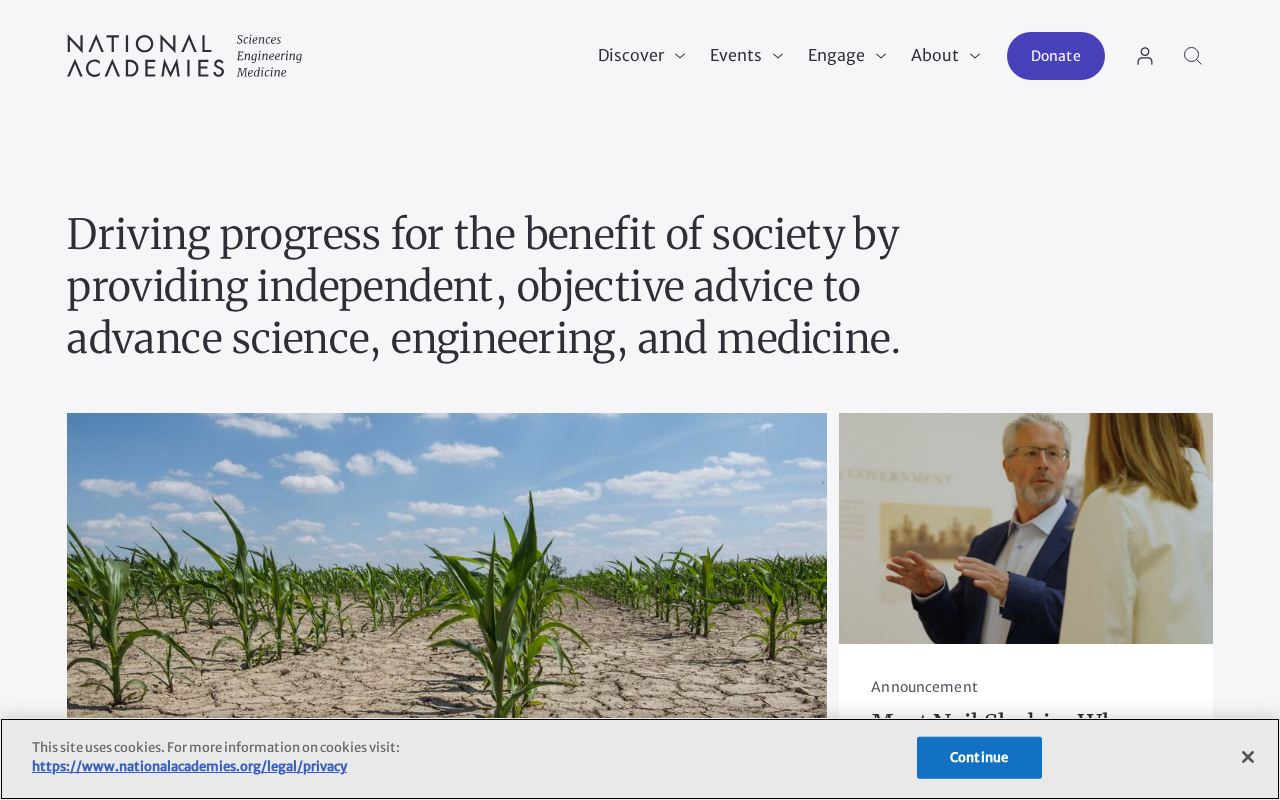
Automated page render — captured in a safe sandbox. What an ordinary visitor would see when loading the site. Marker positions are approximate. See full visual analysis →
Visual analysis
We capture a fresh screenshot of the live page and ask a vision model to look for scam visual patterns — fake trust badges, countdown timers, overlay pop-ups, and visual clones of legitimate brands.
No scam visual patterns detected
The screenshot displays a legitimate, fully-rendered website for the National Academies of Sciences, Engineering, and Medicine with no indicators of malicious activity or scam patterns.
What our vision model saw
3 signalsThe page appears to be a legitimate institutional website for the National Academies of Sciences, Engineering, and Medicine.
Standard cookie consent banner present at the bottom of the page.
Professional layout, typography, and branding consistent with a major non-profit organization.
Intelligence
The domain nationalacademies.org was registered in January 1999 and has operated continuously for over 27 years. Our antivirus network returned zero detections across 92 engines and the hosting IP carries a zero abuse score. The page content matches the known mission of a congressionally chartered nonprofit established in 1863, with professional layout and no phishing or malware patterns. Business registration records confirm the organization as an active U.S. nonprofit. The login form is part of the legitimate member portal, not a credential-harvest attempt. No scam reports or complaints appear in our web research.
Web Research Findings
Our live research agent queries scam-report databases, consumer-review sites, news coverage, and general web search for nationalacademies.org, then cross-checks business-registration records and look-alike domain patterns. Everything below is pulled from what it actually found.
- The domain nationalacademies.org is the official website for the National Academies of Sciences, Engineering, and Medicine (NASEM).
- NASEM is a non-profit, non-governmental organization established by an Act of Congress in 1863 to provide independent, objective advice to the nation on science, engineering, and medicine.
- The site is widely cited by government agencies, academic institutions, and reputable media outlets as a source of evidence-based research and policy advice.
- The organization is funded by a combination of federal government grants, state agencies, private sponsors, and an endowment.
- The website hosts thousands of peer-reviewed reports, which are available for free public access via the National Academies Press.
- Automated security tools may occasionally flag the site as 'suspicious' due to generic risk signals (e.g., lack of user reviews or automated redirect patterns), but these are false positives for this well-established institutional domain.
The National Academies of Sciences, Engineering, and Medicine is a congressionally chartered, private, non-profit organization established in 1863.
Our research found no scam reports, complaints, or negative mentions for nationalacademies.org. The domain is confirmed as the official website of the National Academies of Sciences, Engineering, and Medicine, a nonprofit established by Congress in 1863. Business registration records list the organization as active in the United States.
Domain Timeline
- Jan 29, 1999Domain registered
First appeared in WHOIS records — 27 years old today.
- Jul 17, 2026Latest security review — Flagged as suspicious
This scan re-ran every check; the current findings are detailed above.
nationalacademies.org is an established domain now carrying threat signals. An older domain that starts tripping security checks is a classic pattern for an asset that was sold, repurposed, or compromised — the age alone is not reassurance.
Threat Detection
Scam Network
Antivirus Engines
Security Scans
Checked against the major public blocklists used by browsers and security tools — no hits.
Reputation Sources
How this domain rates across independent threat-intelligence and blocklist providers.
Scam-Type Likelihood
1 scam-type patterns detected
1 of 21 categories showed signals
We check every URL against 21 distinct scam categories so the verdict tells you not just how risky the page is, but what kind of risk it carries. Each meter pulls from page signals, web reports, our AI analyst, vision, and the scam-network cluster — not from raw AV labels.
- Classic tech-support scare copy found (fake Microsoft/Apple alert, remote-access instructions).
- Primary scraped category: fake tech-support page.
1 of 21 categories showed signals
We check every URL against 21 distinct scam categories so the verdict tells you not just how risky the page is, but what kind of risk it carries. Each meter pulls from page signals, web reports, our AI analyst, vision, and the scam-network cluster — not from raw AV labels.
- Classic tech-support scare copy found (fake Microsoft/Apple alert, remote-access instructions).
- Primary scraped category: fake tech-support page.
Technical Details
domain · encryption · redirects · server reputation · referencedThe plumbing behind the site — who registered it, how it’s encrypted, where it’s hosted, and where it links out. A valid certificate or a calm server doesn’t mean the business is honest — scam sites pass these checks too. Use this to corroborate the verdict, not to overturn it.
Contact Verification
We fetched the page and looked for real-world contact details. Legitimate businesses almost always publish an email on their own domain, a phone number, and a postal address. Scam shops usually don't.
- No email uses the site's own domain — legitimate shops usually do.
- No postal address visible on the page.
- Page contains phishing language (account verification, suspension warnings, etc.).
- Scam family match: Phishing Patterns.
- Scam family match: Tech-Support Scam.
- Phone number listed (1979-1999).
- Links to 3 social profiles.
Domain & Encryption
Redirect Chain
- 1301http://nationalacademies.org/
- 2301https://nationalacademies.org/
- 3200https://www.nationalacademies.org/
Server Reputation
Referenced Domains
Outbound domains this page links to or loads resources from. Each links to its own security scan.
What to do
Possible tech-support scare page
Pages like this impersonate Microsoft, Apple, or your ISP to trick you into calling a number or granting remote access.
- Treat nationalacademies.org as unverified
Do not enter credentials or send money until you have independently verified the business.
- Do not call the number and do not install any "support" tool
Microsoft, Apple, Google, and legitimate ISPs never show a pop-up with a phone number. Installing AnyDesk, TeamViewer, or "Windows Support" at their request hands over your computer.
- Close the page — end the browser process if needed
If the page has locked your browser, press Ctrl+Shift+Esc (Windows) or Cmd+Option+Esc (Mac) and end the browser task. Reopen your browser with "Don't restore tabs".
- OpenIf you already gave remote access or paid
Disconnect the device from the internet. Run a full scan with Malwarebytes or a reputable AV. Change your passwords from a different device. Call your bank to dispute any payment and request a new card.
Final Verdict
This is the official website of the National Academies of Sciences, Engineering, and Medicine. The domain is 27.5 years old with clean security scans and a congressionally chartered nonprofit behind it. No action needed.
Safety FAQ
Common questions, answered directly from the scan data above — so the answers always reflect the latest verdict on this page.
- nationalacademies.org raises serious red flags as a tech support scam — avoid interacting with it. The domain is 27.5 years old through Network Solutions, LLC. It may not be an outright scam, but the risk is high enough that you should verify it independently before trusting it with money or data.
- Proceed with caution — nationalacademies.org scores 55/100 on our trust scale. We found enough warning signals to recommend verifying it through independent channels before entering credentials or money.
- If you've already paid or handed over details on nationalacademies.org, act quickly. 1) Contact your bank or card issuer immediately and ask to dispute the charge or open a chargeback — the sooner you act, the better your odds. 2) Report the site to the U.S. FTC at reportfraud.ftc.gov or the FBI's IC3 at ic3.gov, and in the UK to Action Fraud at actionfraud.police.uk. 3) If you entered a password, change it on nationalacademies.org and anywhere you reused it, and turn on two-factor authentication. 4) Watch your bank and email for follow-up fraud, and keep screenshots as evidence.
- Often yes, if you act fast. Payments made by credit or debit card can frequently be reversed through a chargeback or dispute — contact your bank right away and explain it was a fraudulent site. Bank transfers and gift-card or voucher payments are much harder to recover, but you should still report them to your bank and to the FTC (reportfraud.ftc.gov) or Action Fraud (actionfraud.police.uk). Avoid any "refund" or "recovery" service that contacts you first — it's usually a follow-up scam.
- If you called a number or installed remote-access software from nationalacademies.org, treat your device as compromised. Tech-support scams use fake virus warnings to get you to grant remote access, then "find" problems and charge to fix them — sometimes installing real malware or stealing files. Disconnect from the internet, uninstall any remote-access tool they had you add (AnyDesk, TeamViewer, etc.), run a full antivirus scan, change important passwords from a different device, and contact your bank if you paid.
- You can report nationalacademies.org through several official channels: the U.S. FTC at reportfraud.ftc.gov, the FBI's Internet Crime Complaint Center (IC3) at ic3.gov, and — in the UK — Action Fraud at actionfraud.police.uk. You can also flag it to Google Safe Browsing (safebrowsing.google.com/safebrowsing/report_phish) so other browsers warn about it, and report it to the company being impersonated if there is one. Reporting helps get scam sites taken down faster.
- Modern scams are built to look convincing. A valid SSL padlock, a polished template, stock photos, fake reviews, and a trust badge can all be added in minutes and prove nothing about who runs the site. Scammers buy cheap domains, clone real designs, and copy legal pages wholesale. That's exactly why an automated review that checks the domain's age, hosting, blacklists, and behaviour — rather than just how the page looks — is more reliable than a first impression.
- No — all 92 antivirus and blocklist engines in our malware network currently report nationalacademies.org as clean. That's a good sign, though antivirus coverage is only one of the many signals we weigh, and brand-new scam sites can appear clean before vendors catch up.
- No — nationalacademies.org is not currently on the major browser blocklist feeds that Chrome, Safari, Firefox, and Edge rely on. Note that blocklists can lag behind brand-new scam domains, so "not listed" is reassuring but not a guarantee on its own.
- nationalacademies.org is 27.5 years old, registered on January 29, 1999 through Network Solutions, LLC. A multi-year registration history is one of the stronger signals against a scam, though it's never a guarantee on its own — established domains can still be misused.
- Yes — nationalacademies.org presents a valid TLSv1.2 certificate issued by DigiCert Inc · DigiCert EV RSA CA G2, valid for another 86 days. Important caveat: SSL only encrypts the connection between you and the site — it does not verify who runs it. Almost all scam sites now have valid SSL too, so a padlock alone never means "safe".
- nationalacademies.org resolves to an IP operated by National Academy of Sciences in US (University/College/School). Hosting location alone doesn't make a site good or bad — but hosting that doesn't match a brand's claimed country, or that sits on networks known for abuse, is one of the many signals we weigh alongside the verdict above.
User reviews & comments(0)
Share your experience — "Lost $200 on a fake checkout" is more useful than "Scam". Your review helps others avoid traps.