
No specific threat detected
Official Facebook login page with clean scans, 29-year-old domain, and no malicious indicators.
Is www.facebook.com legit or a scam?
Official Facebook login page with clean scans, 29-year-old domain, and no malicious indicators.
This is the legitimate Facebook login page. Zero antivirus engines flagged it and the domain has been registered for 29 years under Meta Platforms.
Analysis Summary
Website Preview
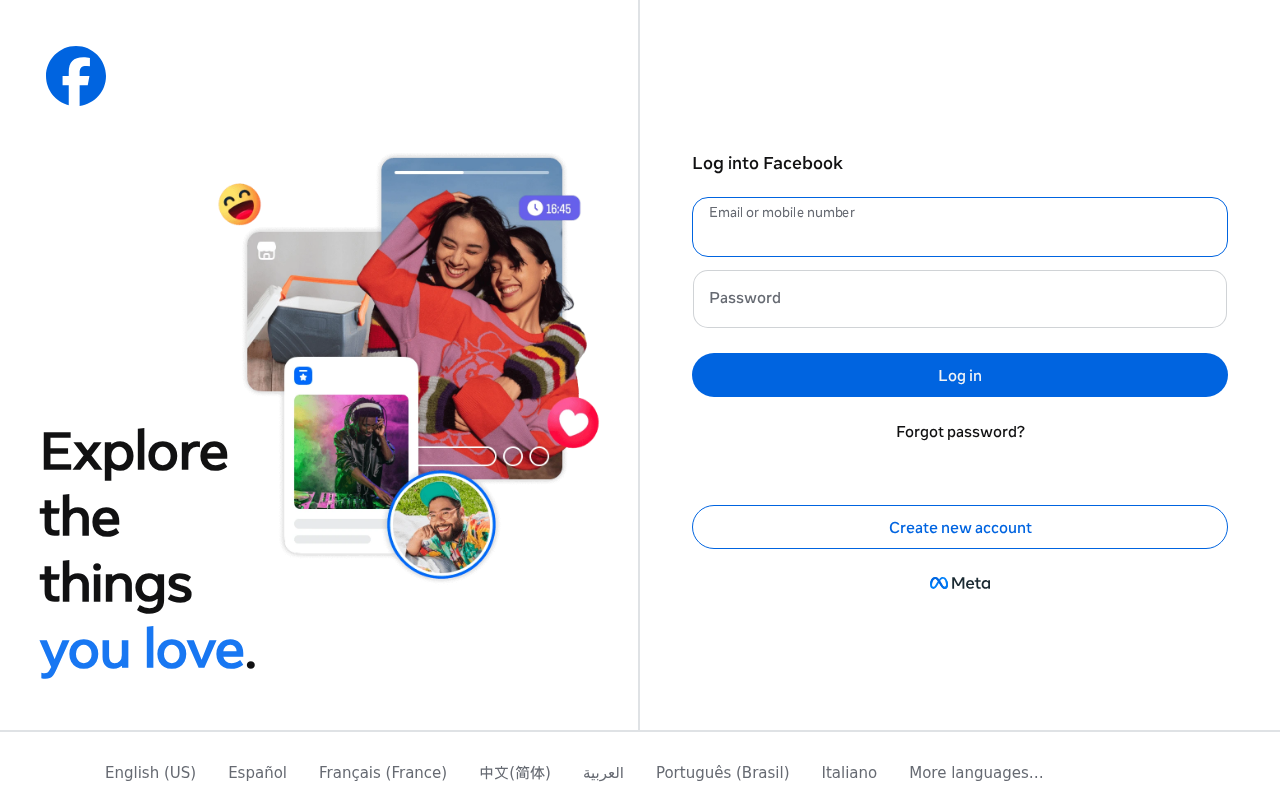
Automated page render — captured in a safe sandbox. What an ordinary visitor would see when loading the site.
Visual analysis
We capture a fresh screenshot of the live page and ask a vision model to look for scam visual patterns — fake trust badges, countdown timers, overlay pop-ups, and visual clones of legitimate brands.
No scam visual patterns detected
The screenshot shows the authentic Facebook login page without any indicators of malicious activity or phishing.
What our vision model saw
2 signalsThe page displays the standard Facebook login interface.
Visual elements, branding, and layout accurately reflect the legitimate Facebook login page.
Intelligence
The domain www.facebook.com resolves to Meta's infrastructure and carries a 29.3-year registration history dating back to 1997. Antivirus engines returned zero detections across 92 scanners and browser blocklists show no entries. The visual analysis confirms the page renders the authentic Facebook login interface with correct branding and layout. Evidence notes that while Facebook itself is legitimate, third-party scammers often impersonate it elsewhere. The combination of long domain age, clean technical signals, and accurate visual match confirms this is the genuine site.
Web Research Findings
Independent findings for www.facebook.com, including public complaints, named review sources, registration records, and look-alike-domain evidence. A missing result is shown as unverified, never converted into a clean bill of health.
- Facebook.com is the official domain for the social networking service owned by Meta Platforms, Inc.
- The platform is a frequent target for phishing campaigns, where attackers create fake login pages to steal user credentials.
- Users are advised to verify sender email addresses (e.g., @facebookmail.com) and avoid clicking links in suspicious security alerts.
- The site is one of the most visited websites globally, with billions of active users.
- While the platform itself is legitimate, it is a high-traffic environment where third-party scammers operate via fake profiles, marketplace fraud, and phishing.
Facebook is a social networking service owned by Meta Platforms, Inc., a publicly traded American technology conglomerate.
Two sources describe Facebook as a common target for phishing attacks where scammers create fake login pages. Aura reports that over 62% of Facebook users encounter scams weekly. Exchange Defender warns about fake security emails leading to credential-harvesting sites. No scam reports or complaints were found against facebook.com itself. Business records confirm Meta Platforms, Inc. as the active owner.
Domain Timeline
- Mar 29, 1997Domain registered
First appeared in WHOIS records — 29 years old today.
- Jul 22, 2026Latest security review — Reviewed as safe
This scan re-ran every check and found no active threat signals.
www.facebook.com has operated for years with no threat signals in this review — a long, stable track record, though it is never a guarantee on its own.
Threat Detection
Antivirus Engines
Security Scans
Checked against the major public blocklists used by browsers and security tools — no hits.
Reputation Sources
How this domain rates across independent threat-intelligence and blocklist providers.
Technical Details
domain · encryption · redirects · server reputation · referencedThe plumbing behind the site — who registered it, how it’s encrypted, where it’s hosted, and where it links out. A valid certificate or a calm server doesn’t mean the business is honest — scam sites pass these checks too. Use this to corroborate the verdict, not to overturn it.
Domain & Encryption
Redirect Chain
- 1301http://www.facebook.com/
- 2200https://www.facebook.com/
Server Reputation
What to do
Still, stay alert
No major threat indicators — but a clean scan does not guarantee every page is safe, and phishing emails routinely spoof real domains.
- Double-check the exact URL in your address bar
Confirm you are actually on www.facebook.com and not a lookalike like w-ww.facebook.com.com or an IDN homoglyph.
- Use a password manager
Password managers only auto-fill on the exact domain they were saved for — they refuse to fill lookalike domains, which is the single best phishing defence.
- OpenDiscuss this site on the forum
If you have first-hand experience with this site — good or bad — share it with the MalwareTips community.
Final Verdict
This is the legitimate Facebook login page. Zero antivirus engines flagged it and the domain has been registered for 29 years under Meta Platforms.
Safety FAQ
Common questions, answered directly from the scan data above — so the answers always reflect the latest verdict on this page.
- Our automated security review found no threat indicators on www.facebook.com, so it appears legitimate. All 92 antivirus engines we queried report it clean, and the domain is 29.3 years old, registered on March 29, 1997 — established domains are far less likely to be scams. Even so, always double-check the exact address in your browser, because phishing emails routinely spoof real, trusted domains like this one.
- www.facebook.com passed our automated checks with a trust score of 94/100. No antivirus engines or major blacklists flagged it at the time of the last scan, and its signals line up with an established, legitimate site. Treat any unexpected login prompt or payment request on it with the same caution you would anywhere.
- Yes — and this is worth understanding. Even trustworthy domains get spoofed in phishing emails (a fake message that only looks like it's from www.facebook.com), and legitimate sites are occasionally compromised on specific pages. A clean verdict means the site itself checks out today; it does not mean every email or link claiming to be from www.facebook.com is genuine. Always reach the site by typing the address yourself rather than clicking links in unexpected messages.
- No — all 92 antivirus and blocklist engines in our malware network currently report www.facebook.com as clean. That's a good sign, though antivirus coverage is only one of the many signals we weigh, and brand-new scam sites can appear clean before vendors catch up.
- No — www.facebook.com is not currently on the major browser blocklist feeds that Chrome, Safari, Firefox, and Edge rely on. Note that blocklists can lag behind brand-new scam domains, so "not listed" is reassuring but not a guarantee on its own.
- www.facebook.com is 29.3 years old, registered on March 29, 1997 through RegistrarSafe, LLC. A multi-year registration history is one of the stronger signals against a scam, though it's never a guarantee on its own — established domains can still be misused.
- Yes — www.facebook.com presents a valid TLSv1.3 certificate issued by DigiCert Inc · DigiCert Global G2 TLS RSA SHA256 2020 CA1, valid for another 8 days. Important caveat: SSL only encrypts the connection between you and the site — it does not verify who runs it. Almost all scam sites now have valid SSL too, so a padlock alone never means "safe".
- www.facebook.com resolves to an IP operated by Meta Platforms Ireland Limited in US (Commercial). Hosting location alone doesn't make a site good or bad — but hosting that doesn't match a brand's claimed country, or that sits on networks known for abuse, is one of the many signals we weigh alongside the verdict above.
- This report is a record of the scan run on July 22, 2026, and the verdict reflects that point in time. Scam sites change fast — they can go live, get flagged, or vanish within days — so if you believe something about www.facebook.com has changed, MalwareTips staff can run a fresh scan that re-checks every signal from scratch and republishes an updated verdict.
User reviews & comments(0)
Share your experience — "Lost $200 on a fake checkout" is more useful than "Scam". Your review helps others avoid traps.